InsightMath
A digital math curriculum built on neuroscience principles, where students explore first and explain after.
The brief
Build digital math lessons where students explore a problem before they're taught how to solve it.
What I did
Wrote Common Core-aligned lessons for grades 4–5: open-ended investigations, predict-and-test puzzles and built-in discussion.
What happened
InsightMath launched nationally in 2025 and was approved in California (K–6) and Texas (K–2).
Organization
MIND Education
Role
Curriculum Developer
Learners
Grades 4–5 (within a K–6 curriculum)
Format
Digital lessons, Common Core-aligned
Year
2022–2023 (during development; launched 2025)
Context
InsightMath is a neuroscience-informed K–6 math curriculum built around visual problem-solving, exploration and mathematical discussion.
Design challenge
Math class often rewards following procedures and getting the right answer. That leaves little room for students to investigate relationships, invent their own strategies and explain their reasoning. The challenge was to design digital lessons that build real conceptual understanding while still meeting grade-level standards.
My role
I wrote Common Core-aligned digital lessons for grades 4–5, turning learning goals into activities that ask students to explore, reason, discuss and connect ideas.
Approach
- Exploration before explanation. Students meet a meaningful problem before they're shown a formal strategy.
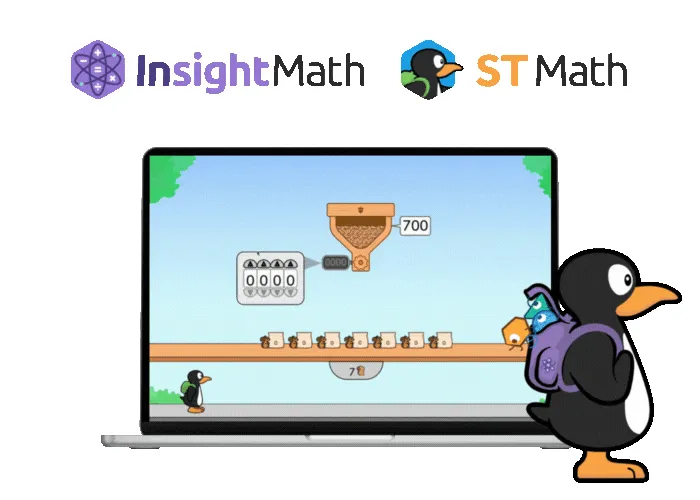
- Visual and interactive models. Students can see and manipulate the math, not just compute it.
- Discussion built in. Students share, compare and refine their thinking with each other.
- Support for teachers. Digital tools help teachers track progress and differentiate.
Outcomes and evidence
InsightMath launched nationally in June 2025. In November 2025, California approved it for kindergarten through Grade 6, and Texas approved its K–2 edition after a state review found it covered 100% of the grade-level standards. A Texas district math specialist who tried it said students exploring a new concept, instead of hearing a lecture, was what made the difference.
What I learned
Students should be active participants in making sense of math, not passive recipients of procedures. Good design can build classrooms where students see themselves as capable mathematical thinkers and members of a community of sense-makers.
Tell me what you're building
Have a learning experience in mind, or just a hunch? I'd love to hear about it.
Start a conversation