How do students learn to disagree in a culture that values harmony?
Fulbright research on how cultural values shape the way students learn and work together.
The brief
Study how Singaporean culture, a unique convergence of Asian traditions, shapes the way students learn and work together.
What I did
Interviewed teachers, school leaders and students, observed lessons from Primary 2 to Primary 6 in two schools, coached Primary 3 math teachers on classroom discussion, and led training on restorative practices.
What happened
While COVID-19 ended the program early, I came to understand that collaboration depends on what a culture values and expects of students, from how they share credit to how openly they disagree.
Program
Fulbright Distinguished Awards in Teaching, 2019–20 cohort
Where
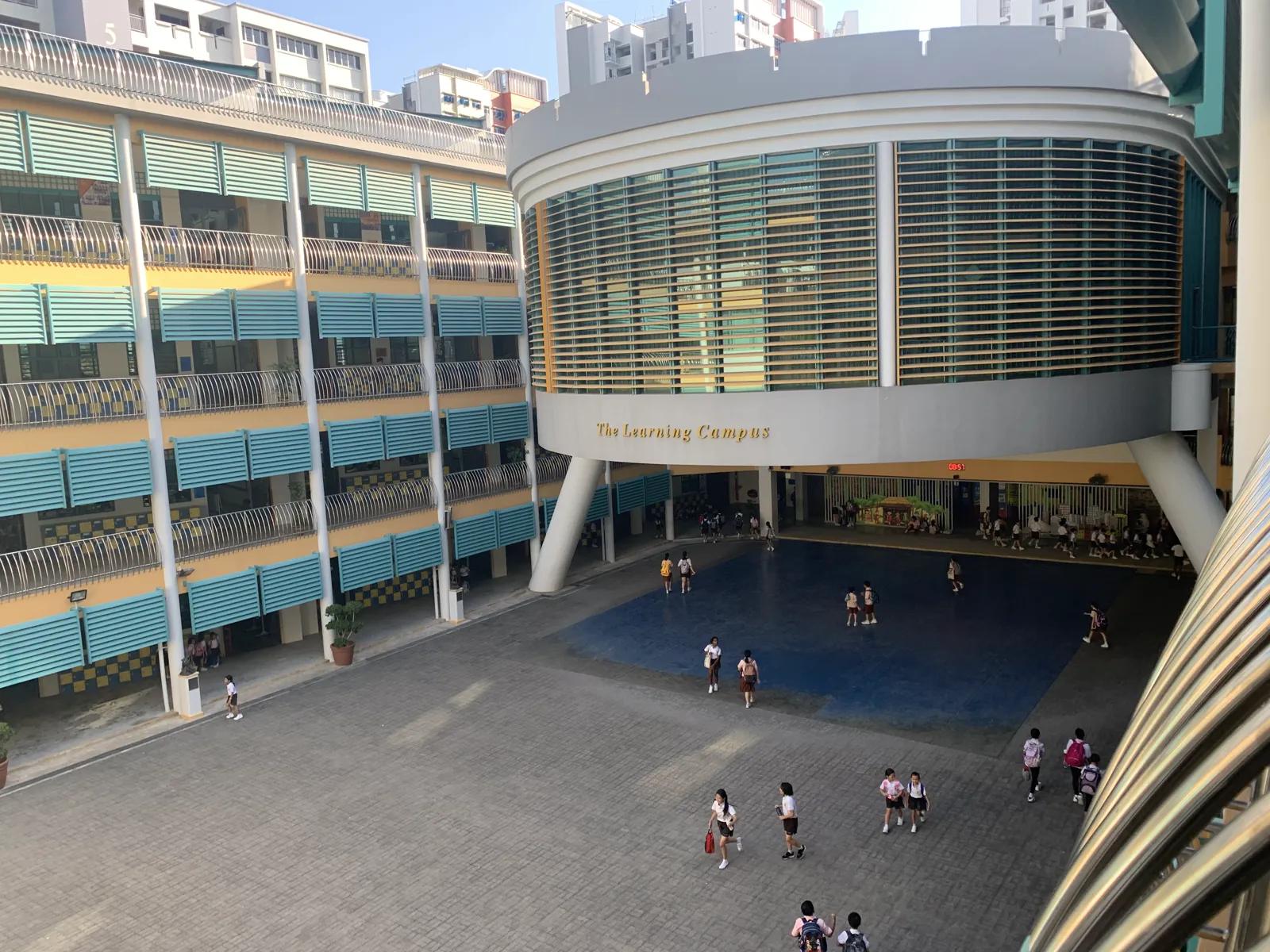
Singapore: Yu Neng Primary, Temasek Primary, National Institute of Education
When
January–March 2020 (planned through May)
Role
Fulbright Distinguished Teacher and researcher
Focus
Culture and collaboration: how shared values shape group work and classroom discussion
Collaboration looks different depending on what students have been taught to value.
Context
In 2015, PISA assessed collaborative problem solving for the first time, and Singapore's 15-year-olds outscored every other country. I wanted to understand what sits behind those results.
After almost a decade teaching in New York City, I went to Singapore on a Fulbright with four questions:
- How do Singaporean students build strong relationships with classmates and teachers, and what role does school play?
- Where do they get real practice collaborating?
- How do shared cultural norms and values, including the respect, care and harmony at the center of the national Character and Citizenship Education curriculum, shape the way they work together?
- Which of these practices could US schools adapt?
I was placed in two primary schools, audited a course at the National Institute of Education alongside teachers from seven countries, and worked with mathematics educator Professor Berinderjeet Kaur as my advisor. The plan was to gather surveys, interviews and classroom observations, then turn what I learned into a unit of relationship-building circles and collaborative tasks for US classrooms.
My role
- Observed math, science and Programme for Active Learning lessons from Primary 2 to Primary 6, and interviewed students and staff.
- Coached Primary 3 math teachers at Yu Neng who wanted richer class discussion. We started in their professional learning meetings, then I modelled lessons that used open-ended, low-floor, high-ceiling tasks to build habits of academic talk.
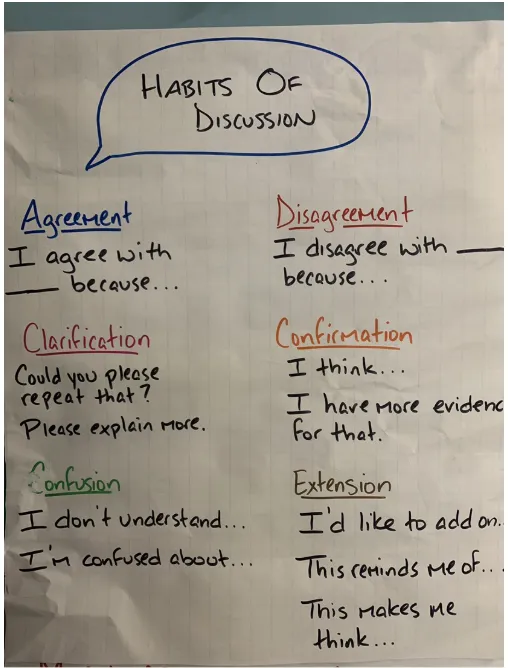
The anchor chart I made for Yu Neng's Primary 3 math discussions. - Facilitated professional development on restorative practices.
What I saw
- The slime question. A Primary 4 class investigated a question a student had asked: is slime a solid or a liquid? Groups of four argued their way to a classification from what they knew about shape and volume. It was the strongest example of student-driven inquiry that I saw in Singapore.
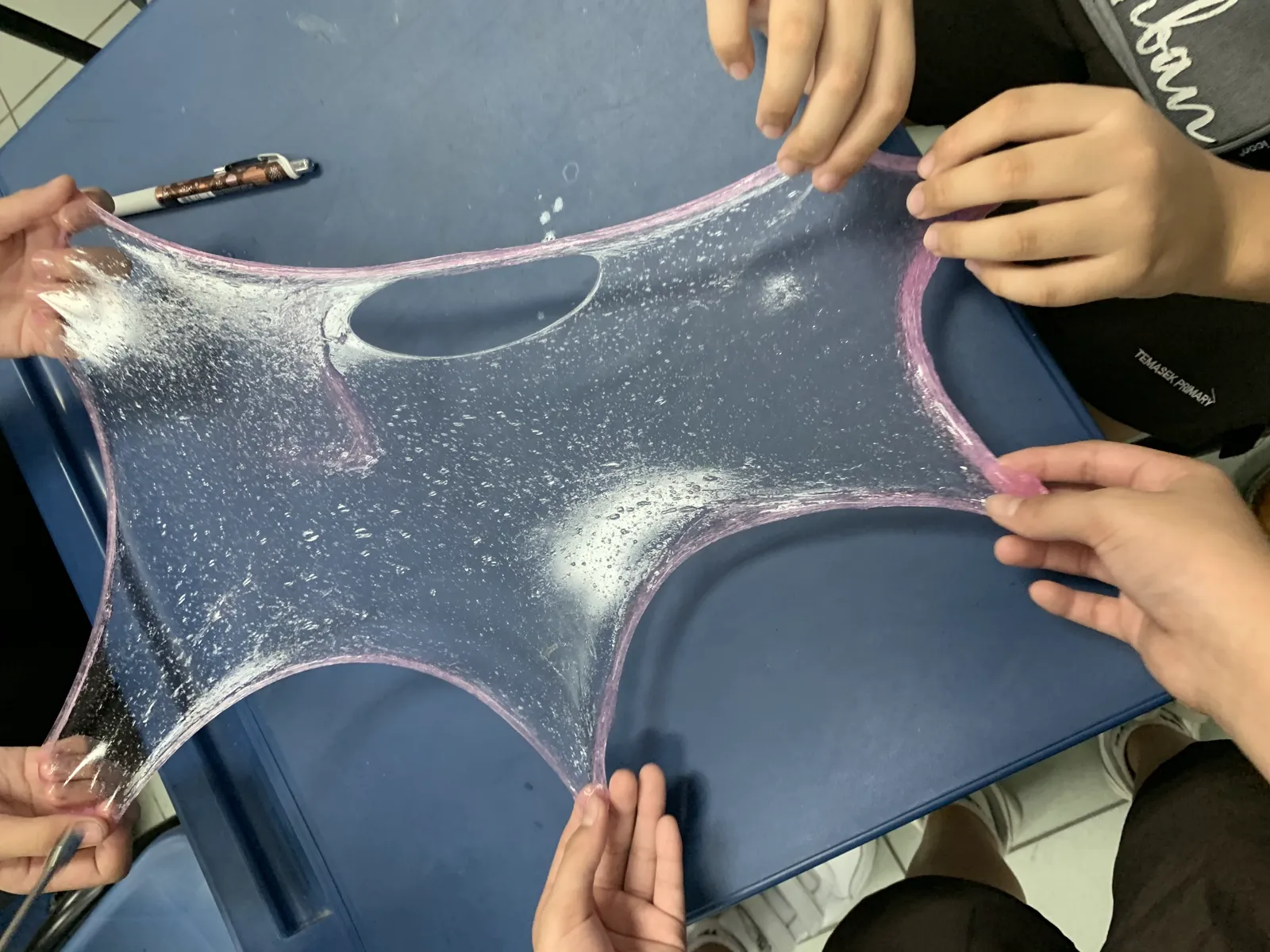
Is slime a solid or a liquid? Primary 4 put it to the test. 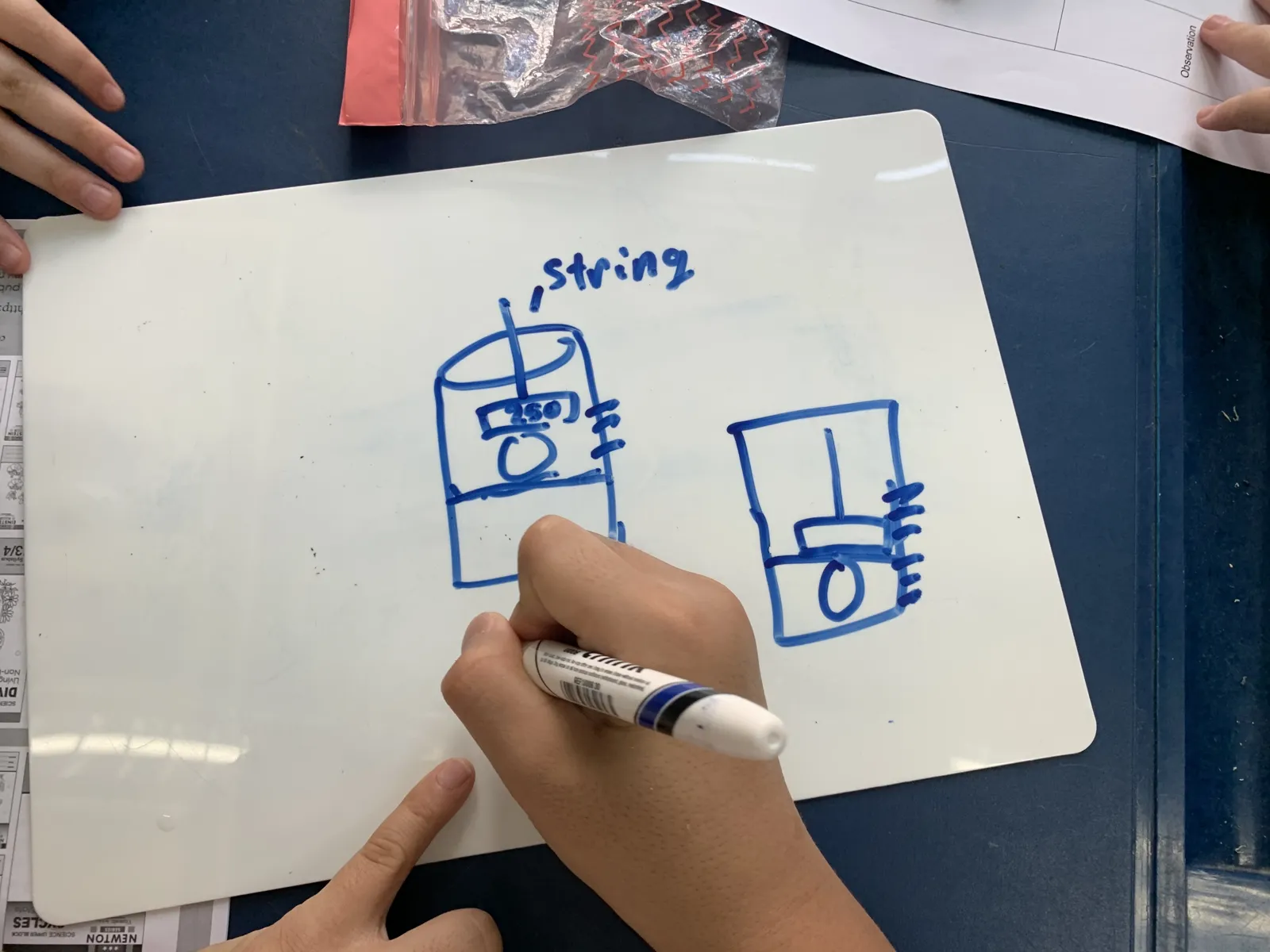
A student's plan for measuring a rubber duck's volume. - The friendly dragon. In a role-play lesson, seven- and eight-year-olds drew a dragon in groups. Almost every one was "mean" or "scary". Then, acting out meeting it, they discovered it was friendly. The debrief turned to prejudice, bias and the harm assumptions can do.
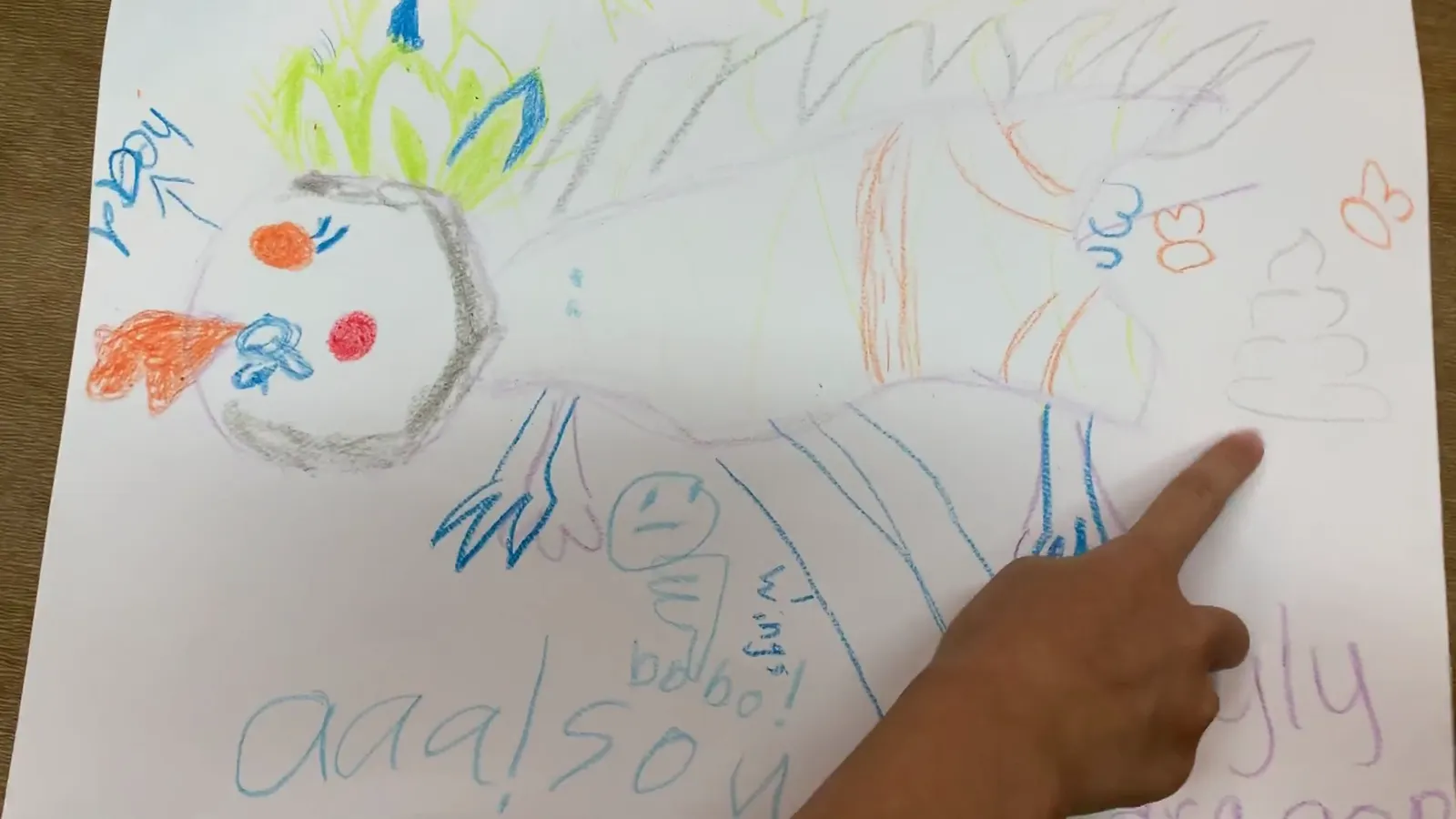
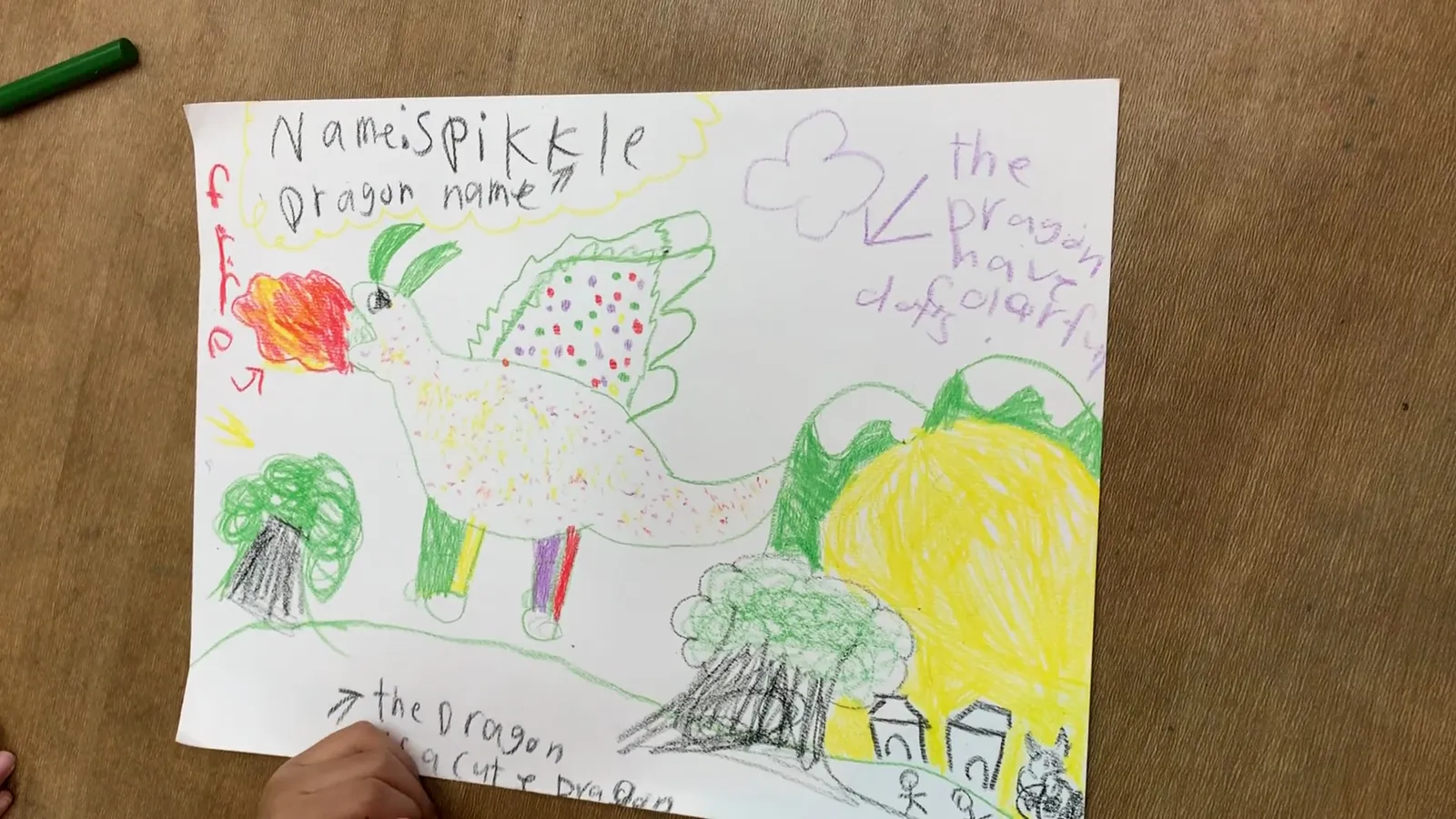
Two of the dragons, before students met them. - Division as sharing. A Primary 2 teacher read The Doorbell Rang while students modelled each new round of sharing cookies on their whiteboards.
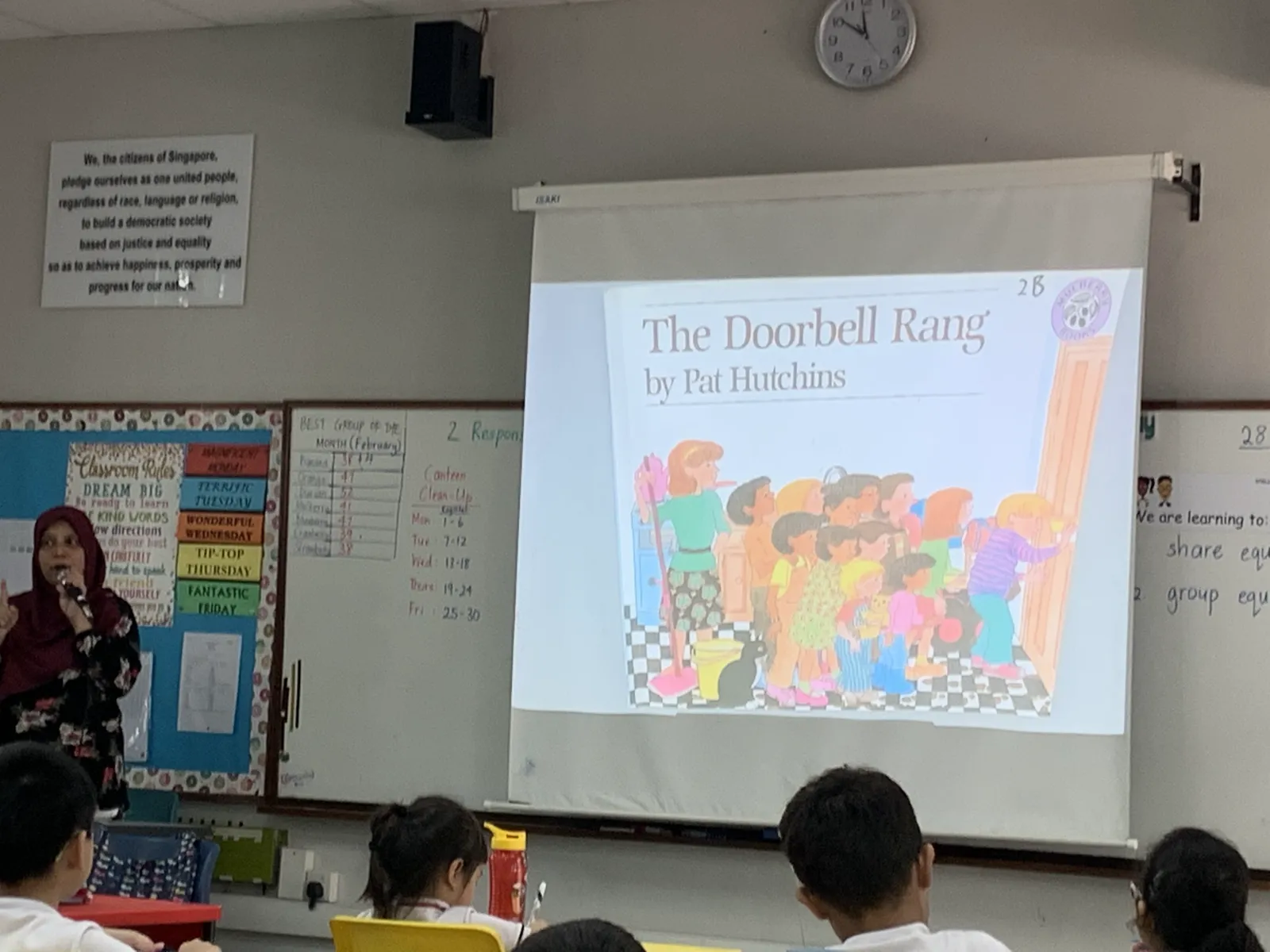
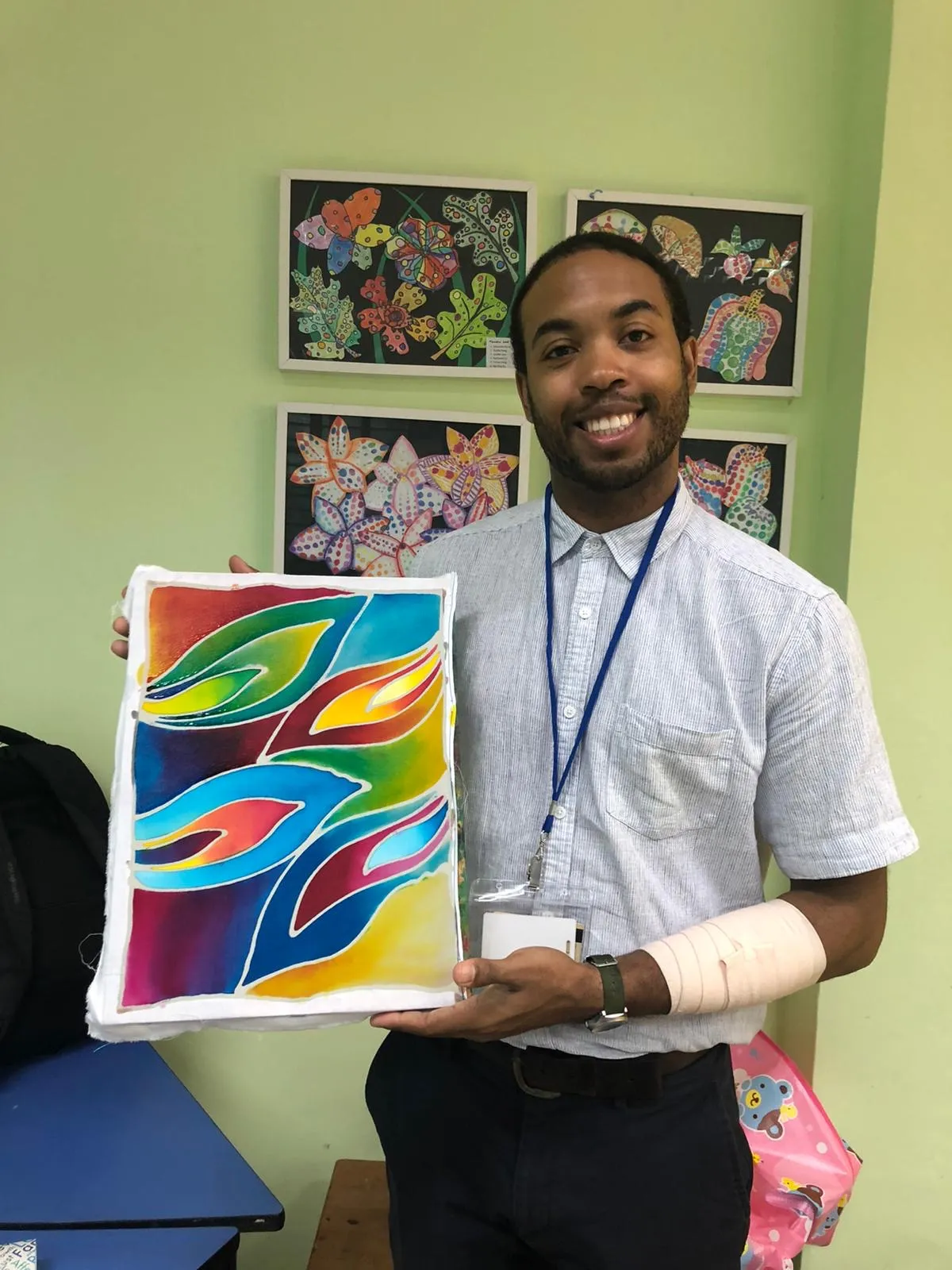
The Doorbell Rang, shared one cookie at a time. - Students as authors. Primary 5 students compared strategies for multiplying a fraction by a whole number, then wrote their own word problems. One starred me.
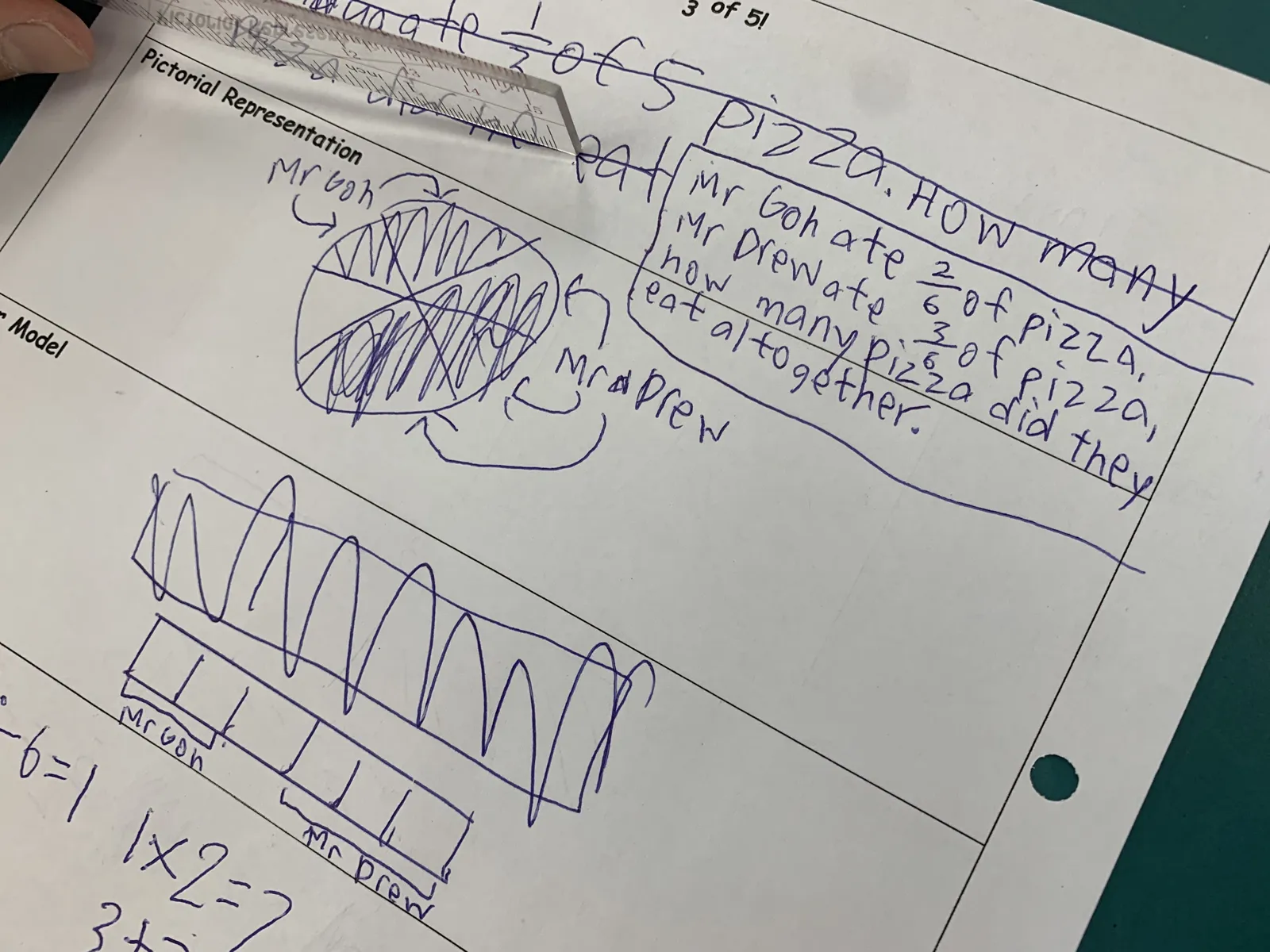
One student's word problem. Mr Drew did not, in fact, eat all that pizza. - Teaching on video. Students recorded videos modelling and explaining a solution, then gave feedback on each other's.
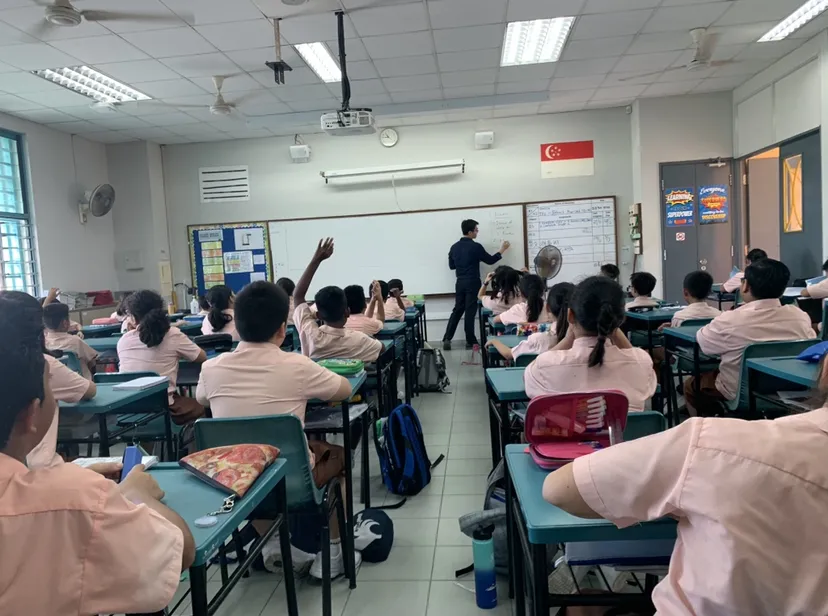
All of this happened in classes of around 40 students with one teacher.
What teachers told me
- A head of department said her upper-primary students avoided being group leader, because the leader takes the blame. She spent two lessons just getting groups to agree on one, then taught the roles step by step.
- A math teacher with more than 20 years in the classroom said most of her group work wasn't collaborative learning "yet". For her, that meant students genuinely building on one another's ideas.
- Once students got real choice in their projects, another head of department estimated she spent 70% of project time managing conflict. She called it a risk the school had chosen to take.
What happened
COVID-19 happened. By February, schools were asked to limit group work: pods of four to six became rows of front-facing desks. My study of collaboration ran into a virus that made sitting together a health risk. On March 21, 2020, Fulbright suspended its programs worldwide, and I flew home the next night, two months early.
What I learned
Singapore taught me to consider the cultural dimensions of collaboration along with the instructional. Schools there teach values like respect, responsibility and teamwork by name, and students carry them into every group. Yet the teachers I interviewed said groups still clashed, not because students held different values but because they ranked the same ones differently: some put the task first, others the relationships. Many students also avoided leading a group, because the leader carries the blame. When I design collaborative work now, I start by asking what learners have been taught a good group member does, and I build roles and norms around it.
Links
Tell me what you're building
Have a learning experience in mind, or just a hunch? I'd love to hear about it.
Start a conversation