Singapore, 2020 · Part 8 of 13 ·
Yu Neng Primary School, Part II
Back in teacher mode: habits of academic talk, low-floor high-ceiling tasks, spinning tops and paper airplanes.
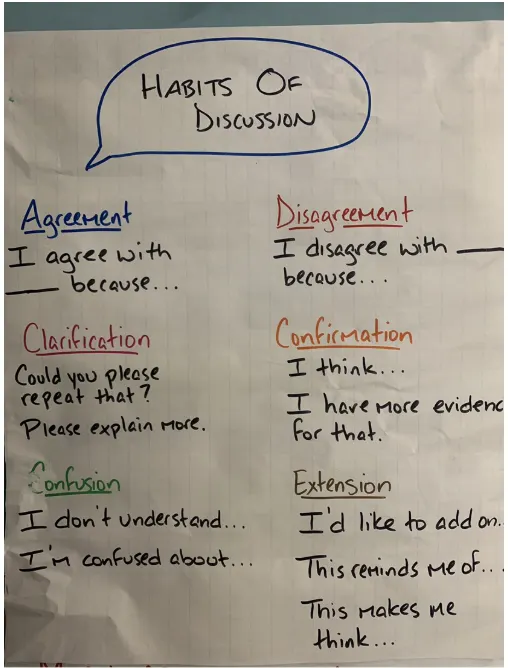
In addition to observing classes and interviewing students and staff at YNPS, I've also been consulting with P3 math teachers, who expressed a desire to improve the quality of discussions during class. I began by exchanging ideas in professional learning team meetings and progressed to modeling instructional practices by leading math discussions with students. In my lessons, I sought to familiarize students with various habits of academic talk through the use of open-ended tasks, which, by their nature, lend themselves well to deep discussions.
It's been thrilling to get back into teacher mode these last few weeks. Collaborating with YNPS teachers has made me more aware of the pedagogical approaches, beliefs, and frameworks that have come to ground my practice. At this point I have to shout out mathematics educator and researcher Jo Boaler. Her work focuses on cultivating productive mindsets about mathematics, namely that everyone can do well in the subject and that there is great value in struggling and making mistakes. She champions "low floor, high ceiling" tasks to build these mindsets in students. LFHC tasks are mathematically accessible to everyone, and they include natural extension opportunities for students to grapple with increasingly complex questions and ideas. In short, everyone can get started and everyone can get stuck. Fundamental to this approach is the idea that communicating, reasoning about, and justifying ideas are central acts in the work of mathematics. For any math educators who stumble across this post: if you're not familiar with Jo Boaler, check her out, and do it ASAP.
Now for a bit about recess, which takes place each day around midmorning. It is 30 minutes of unstructured free time; students are given a fair amount of freedom to choose where and how they will use it. A student could have a meal in the canteen, play on the playground or at board game tables, read in the library, or do arts and crafts. One day, a Malay cultural organization was brought in to teach students traditional Malay games. They set up stations during recess where students learned to play sepak raga bulatan, sepak bulu ayam, main lereng, and others. My favorite was gasing, or top spinning.
Walk into a primary school anywhere in the world, and there's a good chance you'll see a child or two folding and flying paper airplanes. My first few weeks at YNPS were no different. I saw young pilots comparing designs in the library, testing them on the playground and in the hallways, and tucking them into their notebooks as they walked to class. Later I realized that this enthusiasm, like so much in Singapore, was not without purpose. These students were preparing for a schoolwide competition, where they'd vie for the chance to represent Yu Neng at the national level in the Singapore Amazing Flying Machine Competition.
Students spent weeks researching, constructing, and testing designs for paper airplanes to excel in one of two categories: longest distance and longest flight. The schoolwide competition brought out students from across P4, P5, and P6. Medals were awarded for each grade level, with the top two finishers from each grade competing for overall honors.
Next up, connecting with family and turning 31.
✌🏾